You Won’t Believe What I Found in Hiroshima’s Quiet Corners
Hiroshima isn’t just a name from history books—it’s a living, breathing city that quietly rebuilds beauty from the past. I went looking for landmark buildings, expecting solemn monuments, but found so much more: resilience etched in architecture, peace woven into design. From serene shrines to bold modern structures, each building tells a story of survival and hope. If you think you know Hiroshima, think again—this city surprises you when you least expect it.
Arrival: First Impressions of a City That Rose Again
Stepping off the Shinkansen at Hiroshima Station, one is immediately met with a sense of calm modernity. The skyline rises with clean lines and reflective glass, the streets are wide and orderly, and the air carries the faint scent of cherry blossoms in spring or roasted tea in autumn. There is no heaviness in the atmosphere, no oppressive silence—just the gentle hum of daily life unfolding. Bicycles glide along dedicated lanes, families stroll through public plazas, and vendors sell fresh mochi from roadside stalls. This is not the Hiroshima many imagine—a city frozen in 1945—but a thriving urban center that honors memory while embracing the present.
The contrast between expectation and reality is striking. Many travelers arrive with solemn intentions, bracing themselves for sorrow, yet find themselves disarmed by the city’s quiet vitality. This does not diminish the weight of history; rather, it reveals how Hiroshima has chosen to carry that weight with grace. The architecture here speaks of continuity—of bridges rebuilt, parks replanted, and homes restored—not as acts of defiance, but as affirmations of life. Even the train station itself, with its spacious atrium and natural light, feels like a gesture of openness, welcoming visitors not to mourn, but to witness.
What becomes clear within moments of arrival is that Hiroshima’s buildings do not ignore the past—they hold it gently. There is no attempt to erase what happened, nor to dramatize it. Instead, the city’s design philosophy leans toward balance: remembering without being consumed, rebuilding without forgetting. The skyline includes modern office towers and shopping complexes, yes, but they coexist with preserved ruins, tranquil gardens, and public spaces dedicated to reflection. This harmony is not accidental. It is the result of decades of intentional urban planning, where every structure—whether grand or modest—contributes to a narrative of resilience.
The Peace Memorial: A Structure That Speaks Without Words
At the heart of Hiroshima’s architectural story stands the Genbaku Dome, more widely known as the Atomic Bomb Dome. Unlike the surrounding city, which was rebuilt from the ground up, this skeletal remnant was deliberately left untouched. Its rusted steel frame rises like a fossilized hand reaching toward the sky, the dome’s shattered ribs framing the heavens. Constructed in 1915 as the Hiroshima Prefectural Industrial Promotion Hall, it was one of the few structures to partially survive the atomic blast on August 6, 1945. Today, it stands as a UNESCO World Heritage Site, not for its architectural grandeur, but for its profound moral significance.
The decision to preserve the dome in its ruined state was not made lightly. In the decades following the war, there were debates about whether to demolish it or fully restore it. Ultimately, the city chose preservation—not as a monument to destruction, but as a witness to what occurred. The dome does not preach; it simply exists. Visitors approach it across the Peace Memorial Park’s stone pathways, often in silence. The absence of interpretive signs near the structure itself amplifies its power. You don’t need words to understand what it represents. The stillness around it, the way light filters through its broken ceiling, the way birds sometimes nest in its beams—all of it contributes to a quiet, overwhelming sense of presence.
What makes the Genbaku Dome so effective as a symbol is its authenticity. It is not a replica, not a reconstruction. It is real. Its bricks were scorched by the blast, its iron twisted by heat. To stand beneath it is to stand in the shadow of history, not a sanitized version, but the actual footprint of tragedy. Yet, even here, there is beauty—lichen growing on the stone, morning light casting long shadows across the grass, children sketching the structure in school notebooks. The dome does not demand grief; it invites contemplation. It reminds us that memory can be sacred without being morbid, that ruins can teach as powerfully as monuments.
Hiroshima Castle: Where History Wears Many Layers
A short tram ride from the Peace Park brings you to Hiroshima Castle, a reconstruction of the original Edo-period fortress that was destroyed in the bombing. First built in 1599 by the powerful warlord Mori Terumoto, the castle served as both a military stronghold and a symbol of regional authority. Though the current structure dates to 1958, its design faithfully replicates the original wooden keep, complete with tiled roofs, curved eaves, and white plaster walls. Inside, the castle functions as a museum, housing artifacts from the samurai era, historical documents, and interactive displays that bring feudal Japan to life.
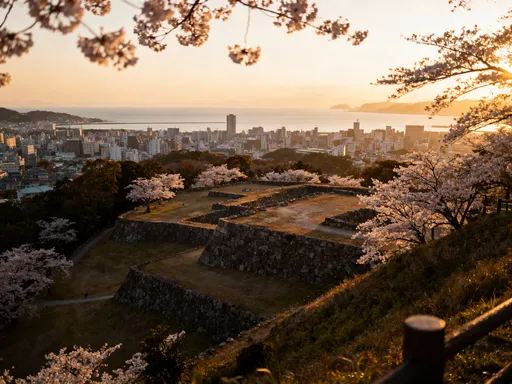
The rebuilding of Hiroshima Castle was more than an act of nostalgia—it was a declaration of cultural continuity. While the Genbaku Dome preserves the memory of loss, the castle represents the revival of identity. It says: we remember who we were, and we choose to remain that people. The castle grounds, known as Castle Park, are especially beloved in spring when cherry blossoms transform the moat into a sea of soft pink. Locals gather for hanami picnics, spreading blankets beneath the trees, sharing food and laughter. It is a place of joy, yet one that exists in quiet dialogue with the past.
The castle’s architecture blends traditional Japanese design with modern accessibility. Elevators and climate control systems allow elderly visitors and families with children to explore all six floors comfortably. Exhibits include armor, swords, and calligraphy, but also personal items—letters, clothing, household objects—that humanize the samurai class. One display features a reconstructed tatami room where visitors can sit and imagine life in the 17th century. Outside, the stone walls and water-filled moat remain largely original, silent witnesses to centuries of change. The castle, then, is not a static relic, but a living space where history is not just observed, but experienced.
Shukkei-en: When Nature and Design Become One
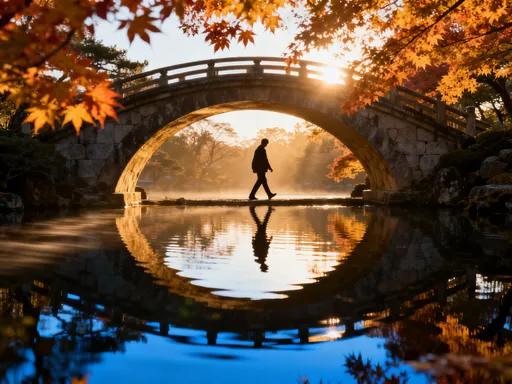
Nestled just north of the castle, Shukkei-en is a strolling garden that embodies the Japanese aesthetic principle of shakkei, or “borrowed scenery.” Created in 1620 for the feudal lord Asano Nagaakira, the garden was designed to feel like a miniature landscape, compressing mountains, rivers, and forests into a compact, carefully curated space. A small lake forms its centerpiece, spanned by arched bridges and dotted with rocky islets. Wooden teahouses perch at scenic vantage points, their verandas extending over the water. Every path, every vista, has been composed with intention, guiding the visitor through a sequence of quiet revelations.
The architecture within Shukkei-en is subtle but profound. The pavilions are built from natural materials—cedar wood, paper screens, stone foundations—allowing them to blend seamlessly with their surroundings. One structure, the Tsukimi Pavilion, is elevated to offer panoramic views of the garden during moon-viewing festivals. Another, the Sansei-an Tea House, is used for traditional tea ceremonies, where the ritual of preparation becomes part of the garden’s rhythm. These buildings do not dominate the landscape; they serve it. Their low profiles, open sides, and natural finishes ensure they feel like extensions of the environment rather than intrusions.
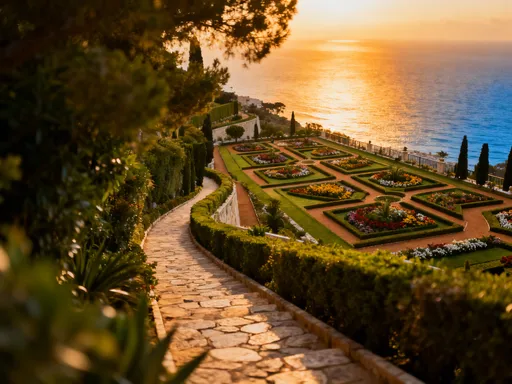
What makes Shukkei-en particularly moving is its resilience. Like much of Hiroshima, the garden was devastated in 1945. Yet, it was meticulously restored using original plans and traditional techniques. Today, it thrives as both a tourist destination and a sanctuary for locals. Early in the morning, you might see an elderly couple walking hand in hand along the gravel paths, or a woman practicing tai chi beneath a willow tree. In autumn, maple leaves turn the garden into a tapestry of red and gold. The seasonal changes remind visitors that healing is not a single event, but an ongoing process—like pruning a bonsai, requiring patience and care. Shukkei-en is not just beautiful; it is a lesson in harmony, a place where nature and human design coexist in mutual respect.
Modern Statements: Contemporary Buildings With a Purpose
While Hiroshima honors its past, it is equally committed to shaping its future through thoughtful contemporary architecture. One standout example is the Hiroshima City Museum of Contemporary Art, located in the leafy hills of Hijiyama Park. Opened in 1989, the museum was designed by architect Kisho Kurokawa, a pioneer of the Metabolist movement in Japanese architecture. Its bold, geometric forms—cylindrical towers, angular walkways, exposed concrete—are softened by the surrounding forest. Large glass walls allow natural light to flood the galleries, blurring the boundary between interior and exterior.
The museum’s design reflects a philosophy of openness and integration. Rather than imposing itself on the landscape, it nestles into the hillside, with terraced levels that follow the natural slope. The use of raw concrete, while stark, ages gracefully, developing a patina that speaks to time and endurance. Inside, the galleries host rotating exhibitions of modern Japanese and international art, often focusing on themes of peace, identity, and transformation. The building itself becomes part of the artistic message—its spacious atrium, circular skylights, and contemplative courtyards encouraging slow, reflective movement.
Beyond the art museum, Hiroshima’s civic architecture consistently emphasizes accessibility, sustainability, and human scale. The Hiroshima Prefectural Civic Center, for instance, features wide plazas, public seating, and transparent facades that invite community engagement. The city’s public libraries, community halls, and transportation hubs are designed with clarity and warmth, avoiding cold institutionalism. Even newer residential developments incorporate green spaces, pedestrian pathways, and energy-efficient materials. This architectural ethos suggests a city that values not just function, but dignity—that believes public spaces should uplift the spirit, not merely serve utility. In this way, Hiroshima’s modern buildings are not just functional; they are moral statements, shaped by the lessons of history.
Hidden in Plain Sight: Smaller Structures With Big Stories
While the Genbaku Dome and Hiroshima Castle draw the most attention, some of the city’s most meaningful architectural moments are found in quieter, lesser-known places. Along the banks of the Motoyasu River, a fragment of the original T-shaped bridge remains embedded in the riverbank, its scorched stone a silent testament to the blast’s reach. Near Shukkei-en, a modest stone gateway marks the former entrance to a temple that once stood there, destroyed in the bombing. Today, it is surrounded by azaleas and moss, a quiet memorial maintained by neighborhood volunteers.
These small structures do not come with crowds or guidebooks, yet they carry deep emotional weight. A preserved wall from the former Hiroshima Orphanage, now part of a public park, bears faint pencil marks indicating children’s heights—measurements taken before the war, never added to. Nearby, a simple bell tower at Honkawa Elementary School stands as a memorial to the students and teachers lost that day. The school has been rebuilt, but the tower remains, its chime heard every morning during a moment of silence.
What these sites share is intimacy. They are not grand declarations, but personal echoes. They invite you to slow down, to look closely, to read the stories written in stone and shadow. A cracked tile, a weathered inscription, a single surviving tree—each becomes a portal to the past. For travelers, these moments can be the most powerful, precisely because they are unscripted. There is no admission fee, no audio guide, just the quiet presence of memory. In a world of curated experiences, these unassuming landmarks remind us that history lives not only in museums, but in the details we almost overlook.
Why These Buildings Matter Beyond Sightseeing
Hiroshima’s architecture, in all its forms, does more than document history—it shapes it. Each structure, whether preserved ruin or modern civic building, contributes to a collective identity rooted in resilience, peace, and renewal. The city does not ask visitors to feel guilt or sorrow alone; it invites them to witness how a community can rebuild not just buildings, but meaning. The Genbaku Dome teaches remembrance without bitterness. The castle reclaims cultural pride. The gardens restore balance. The contemporary spaces imagine a future built on openness and care.
For travelers, especially those in midlife who may be reflecting on their own journeys of loss and recovery, Hiroshima offers a profound model of healing. The city does not rush. It does not pretend the past never happened. Instead, it integrates memory into daily life, allowing sorrow and beauty to coexist. This is evident in the way locals treat these sites—not as tourist attractions, but as part of their living environment. A grandmother points out the cherry blossoms at the castle to her granddaughter. A student sketches the dome for an art project. A couple shares bento boxes under the maples in Shukkei-en. These everyday moments are as important as the monuments themselves.
Architectural tourism is often about aesthetics—beautiful facades, iconic skylines, photogenic details. But in Hiroshima, the value lies deeper. Here, buildings are not just seen; they are felt. They carry weight, not of stone, but of story. They remind us that places, like people, can endure, adapt, and grow. To visit Hiroshima is to understand that reconstruction is not the opposite of memory—it is its companion. The city shows us that healing is possible, not by forgetting, but by building anew, with intention and care.
In a world where conflict and division often dominate the news, Hiroshima stands as a quiet testament to what is possible when a community chooses peace. Its buildings are not just structures of wood, steel, and concrete—they are vessels of hope. They teach us that even after unimaginable loss, life can return, not as a replica of what was, but as something deeper, more thoughtful, more human. The city does not shout its message. It whispers it, in the rustle of leaves, the reflection of water, the silence between footsteps on a stone path.
Traveling through Hiroshima is not about checking landmarks off a list. It is about learning to see with greater sensitivity—about noticing how architecture can honor the past while nurturing the future. It is about understanding that beauty can emerge from brokenness, that peace is not the absence of conflict, but the presence of care. Let this be more than a journey to a destination. Let it be an invitation to look closely, to listen deeply, and to carry forward the quiet strength that Hiroshima, in every brick and beam, so gently offers.