You Won’t Believe What I Ate in Bologna — This City’s Food Scene Is Next Level
Bologna, Italy, isn’t just another stop on the Italian tour — it’s where food comes alive. I went there expecting pasta, sure, but what I found was a full-on sensory explosion. From buttery tortellini made by hand at dawn to rich ragù simmering for hours in tiny trattorias, every bite told a story. It’s not just eating — it’s experiencing culture through flavor, tradition, and passion. If you're chasing real Italian cuisine, Bologna isn’t an option. It’s the destination. The city moves to the rhythm of dough being rolled, wine being poured, and generations sharing tables. Here, meals are not rushed; they are ceremonies. And as I wandered beneath its sun-dappled porticoes, I realized this was not merely a place to visit — it was a place to feel at home, one perfect bite at a time.
Arrival in Bologna: First Impressions That Surprise
Stepping into Bologna for the first time feels like discovering a secret that Italy has carefully kept. Unlike the crowded piazzas of Rome or the floating maze of Venice, Bologna unfolds at a gentler pace. The city greets visitors with its iconic porticoes — over 25 miles of covered walkways that stretch like open arms through its historic center. These arched passageways, built centuries ago for shelter and shade, now serve as quiet corridors where locals stroll with shopping bags, students rush to class, and elders sip coffee in morning light.
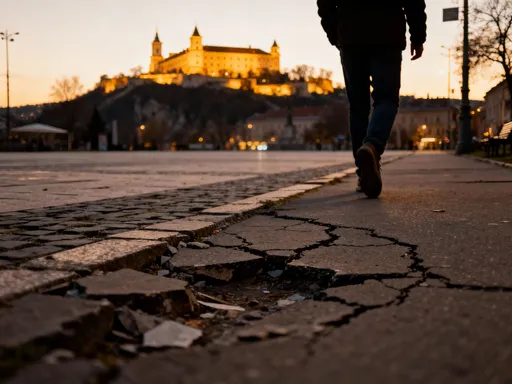
The golden hue of the late afternoon sun reflecting off terracotta rooftops gives the city a warm, almost dreamlike glow. Cobblestone streets wind gently upward, leading to hidden courtyards and unmarked doorways that hide centuries of stories. There’s a quiet hum beneath the surface — the clatter of dishes from a kitchen window, the murmur of conversation at a corner bar, the occasional chime of a bicycle bell. It’s a city that doesn’t perform for tourists; it simply lives.
One of the most striking contrasts to more famous Italian destinations is the absence of overwhelming crowds. While Florence draws art pilgrims and Venice overflows with day-trippers, Bologna maintains a sense of authenticity. Locals still gather at the same bakeries their parents did, ordering the same morning pastry with the same friendly nod. Shops may open later in the day, but when they do, they do so with purpose. Families gather at trattorias by mid-morning for a quick espresso and a chat. Life unfolds in layers, not in haste. This slower rhythm isn’t laziness — it’s intentionality. And for travelers seeking connection over checklist tourism, it’s a revelation.
Why Bologna Is the Real Heart of Italian Cuisine
If Rome is the capital of Italy and Florence the heart of the Renaissance, then Bologna is unquestionably the soul of Italian food. Locals proudly call it La Grassa — “The Fat One” — a nickname not of insult, but of honor. It speaks to the city’s deep culinary richness, its devotion to slow-cooked sauces, handmade pasta, and cured meats that have defined Emilia-Romagna’s gastronomic identity for generations. This is not a city that eats to live; it lives to eat, and with great pride.
Bologna’s reputation as Italy’s food capital is not exaggerated. It is the birthplace of some of the country’s most beloved dishes. Tagliatelle al ragù, often mislabeled abroad as “spaghetti Bolognese,” is a sacred preparation here — flat ribbons of fresh egg pasta draped in a rich, slow-simmered meat sauce made with minced beef, pancetta, carrots, celery, wine, and tomato. The sauce cooks for hours, never boiled furiously, but gently coaxed into depth and harmony. It is not a dish to be rushed, nor to be served with the wrong pasta. In Bologna, tradition is not optional — it is recipe.
Then there are tortellini, delicate parcels of dough shaped to resemble the navel of Venus, according to local legend. Stuffed with a mixture of pork, prosciutto, Parmigiano-Reggiano, and nutmeg, they are typically served in a clear capon broth, a preparation so revered that a group of Bolognese food experts once formally defined the “true” way to make them — down to the exact weight and filling ratio. Even mortadella, the finely ground pork sausage studded with cubes of fat and peppercorns, originated here. It is not the “bologna” of American sandwich counters; it is a delicacy, protected by European law as Mortadella Bologna IGP.
In 2015, Bologna’s commitment to culinary heritage was recognized internationally when UNESCO included the city’s traditional food culture in its list of intangible cultural heritage. This was not just about recipes, but about a way of life — the knowledge passed from grandmother to grandchild, the seasonal markets, the communal meals. To eat in Bologna is to participate in a living tradition, one that values quality, patience, and pride above all.
A Morning Like No Other: Joining a Local Pasta-Making Class
One of the most transformative experiences I had in Bologna was rolling dough by hand in a small, family-run cooking school tucked beneath a portico in the city center. The class began at 9 a.m. with flour already dusted across wooden tables, eggs cracked into bowls, and a nonna-like instructor named Lucia demonstrating the proper ratio: 100 grams of flour to one egg. “Too much egg,” she warned, “and the pasta becomes sticky. Too little, and it cracks. It must feel like silk.”
As I pressed the heels of my hands into the dough, folding and turning, I felt a surprising sense of calm. The rhythm was meditative — push, fold, rotate. The scent of fresh eggs and flour filled the air. Lucia moved from student to student, adjusting pressure, offering quiet praise. “Good,” she said, nodding at my uneven sheet. “Now thinner. Like a veil.” With a hand-cranked pasta machine, we rolled the dough until it was translucent, delicate enough to read a love letter through, as the Italians say.
Then came the shaping — the moment I had both anticipated and feared. Tortellini are not easy to form. Each small circle of pasta must be filled with a precise amount of filling, folded into a triangle, then wrapped around the finger and sealed into its signature ring. My first few attempts looked more like crumpled laundry than navel-shaped masterpieces. But Lucia laughed kindly. “Even I made ugly ones at first,” she said. “The hands learn what the eyes see.”
After an hour of patient folding, we dropped our imperfect creations into boiling water. When they floated to the surface, we fished them out and served them in steaming broth. The first bite was unforgettable — tender, rich, deeply comforting. But more than the taste, it was the feeling of connection that lingered. I hadn’t just eaten pasta; I had made it, with my own hands, guided by someone who had spent a lifetime mastering the craft. That meal wasn’t consumption — it was communion.
Exploring the Quadrilatero Market: A Feast for the Senses
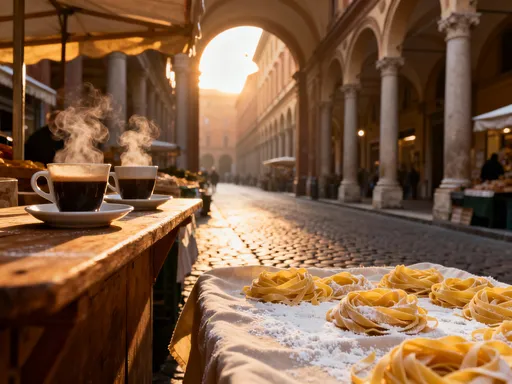
No visit to Bologna is complete without a walk through the Quadrilatero, the historic market district that once stood at the heart of the ancient Roman city. Tucked between narrow streets and leaning buildings, this is where Bologna’s culinary soul beats loudest. The market opens early, and by 8 a.m., the air is thick with the scent of baking bread, cured meat, and fresh herbs. Stalls overflow with color and texture — wheels of Parmigiano-Reggiano the size of wagon tires, ruby-red slices of prosciutto di Parma draped like silk, baskets of porcini mushrooms still dusted with forest soil.
Every vendor seems to carry a story. At one counter, a third-generation cheesemonger taps a 36-month-aged Parmigiano with a small hammer, listening to the echo to judge its quality. “If it sings,” he says with a grin, “it’s ready.” At another, a woman slices mortadella so thin it nearly dissolves on the tongue, offering samples with a warm “Provi, signora?” — “Try it, madam?” Her family has run this stall since 1947, she tells me, and she still uses her grandmother’s knife.
The market is not just a place to buy food — it’s a living museum of regional pride. Balsamic vinegar from Modena glistens in hand-blown bottles, aged for 12, 18, or even 25 years. Fresh tagliatelle hangs in golden braids from ceiling hooks. Artisan bakers display piadina, the flatbread of the Romagna region, still warm from the griddle. There are olives marinated in lemon and thyme, jars of preserved vegetables, and baskets of figs so ripe they burst with sweetness.
What makes the Quadrilatero special is not just the quality of the goods, but the relationships that unfold here. Locals greet vendors by name. They debate the best batch of cheese, the ripest melon, the perfect cut of pancetta. Children are handed samples of fresh mozzarella, their faces lighting up at the creamy burst. It’s a place where food is not transactional — it’s relational. And for visitors, it offers a rare chance to witness, and participate in, the daily rituals that define Bolognese life.
Beyond Food: Hidden Gems That Elevate the Experience
While Bologna’s cuisine is its crown jewel, the city offers cultural treasures that deepen the travel experience. One of the most rewarding activities is climbing the Asinelli Tower, one of two medieval towers that still stand from Bologna’s skyline of over 100 in the 12th century. The other, the Garisenda Tower, leans so dramatically it was once described by Dante in the Divine Comedy. The Asinelli, though less famous, offers something unforgettable: 498 steps to a panoramic view that stretches across red rooftops, rolling hills, and the distant Apennines.
The climb is not for the faint of heart — the stairs are narrow, steep, and uneven — but the reward is worth every breath. From the top, Bologna reveals itself as a city of layers — ancient and modern, quiet and vibrant. On clear days, you can see as far as the Po Valley. It’s a moment of stillness and awe, a chance to reflect on the city’s enduring beauty.
Equally enriching is a stroll through the university district. Founded in 1088, the University of Bologna is the oldest continuously operating university in the world. Its influence is felt everywhere — in the youthful energy of the streets, the lively debates in cafés, the bookshops overflowing with philosophy and law texts. Students in wool coats and scarves hurry to lectures in buildings that were once monasteries. The blend of academic rigor and everyday life gives the city an intellectual warmth that few others possess.
Another quiet highlight is the Church of San Petronio, dedicated to Bologna’s patron saint. Its unfinished facade — only the lower portion completed in marble — gives it a humble dignity. Inside, the vast nave soars upward, and the air is cool and reverent. But what truly captivates is the meridian line embedded in the floor, an 18th-century astronomical instrument used to track the sun’s movement. At noon on sunny days, a beam of light crosses the line, marking true solar time. It’s a moment of precision and poetry, a reminder that Bologna has long valued both knowledge and beauty.
Dining Like a Local: From Osterias to Aperitivo Culture
To truly understand Bologna, one must embrace its dining rhythm. Meals here are not quick affairs. Dinner often begins after 8 p.m., and it unfolds in stages — an aperitivo, a first course, a second, dessert, coffee, and perhaps a digestif. The focus is not on speed, but on presence. Tables are shared, voices rise and fall in conversation, and wine flows freely.
The aperitivo tradition is a perfect introduction to this mindset. Around 6 p.m., locals begin to gather in bars and osterias for a pre-dinner drink — a spritz, a glass of Lambrusco, or a Negroni. But here, the drink is only half the experience. Most establishments offer a buffet of small bites — cured meats, marinated vegetables, mini quiches, warm crostini — included with the price of the drink. This is not fast food; it’s social food. It encourages lingering, talking, laughing. It turns a simple drink into an event.
For dinner, the best experiences are often found in unassuming osterias tucked beneath porticoes, their chalkboard menus changing daily based on what’s fresh. These are not tourist traps with photo menus; they are neighborhood institutions where the owner greets regulars by name. A typical evening might begin with tortellini in brodo, followed by a plate of tagliatelle al ragù, then a simple grilled cutlet with seasonal greens. Wine is usually local — a bold Sangiovese or a fizzy Pignoletto — poured from carafes.
The message is clear: eating in Bologna is not about indulgence for indulgence’s sake. It’s about savoring, sharing, and slowing down. It’s about recognizing that a meal is not just fuel — it’s a moment of connection, a celebration of life’s simple, enduring pleasures.
Practical Magic: Tips to Make Your Trip Smooth & Memorable
Visiting Bologna is a joy, but a few practical tips can make the experience even richer. First, book your cooking class in advance. These small, intimate sessions fill up quickly, especially in spring and fall. Look for schools that emphasize traditional techniques and use local ingredients — many are run by women who learned from their mothers and grandmothers.
Visit the Quadrilatero Market early in the morning, ideally between 8 and 10 a.m. This is when the stalls are fullest, the produce freshest, and the vendors most talkative. Come hungry — most are happy to offer samples, and saying “Grazie” with a smile goes a long way.
Wear comfortable shoes. Bologna’s cobblestone streets are beautiful but unforgiving. Flat, supportive footwear is essential, especially if you plan to climb the Asinelli Tower or explore the hilly neighborhoods outside the center.
Consider staying in the historic center, within walking distance of Piazza Maggiore. This allows you to experience the city at different times of day — the quiet morning light, the bustling lunch hour, the golden evening aperitivo hour. Many guesthouses and small hotels are family-run and offer a personal touch you won’t find in larger chains.
Take advantage of Bologna’s excellent train connections. Day trips to Modena (home of balsamic vinegar and Ferrari), Florence (art and history), or Parma (prosciutto and opera) are easy and scenic. The high-speed Frecciarossa trains make Florence just 37 minutes away.
Most importantly, allow yourself to slow down. Bologna does not reward the hurried traveler. It rewards those who linger over coffee, who ask a vendor about their family recipe, who sit at a table for two hours and simply watch the world go by. This is a city that reveals itself in moments — the steam rising from a fresh plate of pasta, the laughter at a shared table, the quiet beauty of an empty piazza at dusk. It asks only that you be present.
Bologna doesn’t shout for attention — it whispers through the steam of fresh pasta, the clink of wine glasses, and the footsteps echoing under ancient arcades. It’s a place where every meal feels like an invitation to belong. Travelers seeking depth, authenticity, and flavor won’t just enjoy Bologna — they’ll carry it with them long after they leave.