You’ve Never Seen Shopping Like This in Sana’a
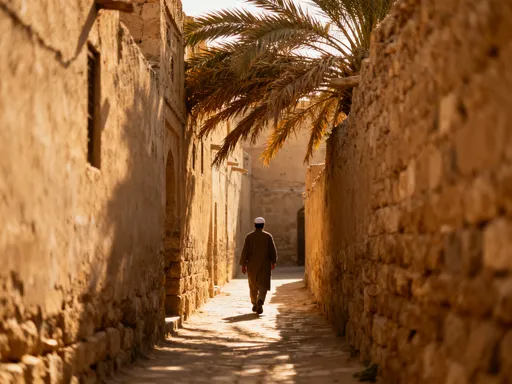
Walking through Sana’a feels like stepping into a living museum—ancient alleys, painted houses, and the scent of spices in the air. I went not to rush, but to linger, to see—really see—what slow travel means. And nowhere does it better than its markets. This isn’t shopping for souvenirs; it’s about connection, rhythm, and discovery. From bustling old souks to quiet artisan corners, every purchase tells a story. Let me take you where time slows and every thread, every spice jar, holds meaning.
The Soul of Slow Travel in Sana’a
Slow travel is not simply a trend; it is a mindset rooted in presence, respect, and intention. It means moving through a place not to check landmarks off a list, but to absorb its rhythm, listen to its people, and allow the journey to shape you. In Sana’a, this approach becomes not just rewarding, but essential. The city does not lend itself to hurried footsteps or surface-level glances. Its beauty unfolds gradually, in the curve of an arched doorway, the pattern of hand-carved plaster, or the soft hum of conversation drifting from a shaded courtyard.
Despite the challenges that have affected Yemen in recent years, Sana’a remains a city of profound cultural resilience. For the mindful traveler, it offers an experience increasingly rare in the modern world: authenticity without performance. There are no tourist traps here, no staged performances for foreign eyes. What you encounter is daily life, lived with dignity and grace. To walk its streets is to witness centuries of history still breathing in the present moment.
Travelers must, however, approach Sana’a with care. Respect is not optional—it is the foundation of any meaningful interaction. Dressing modestly, asking permission before photographing people, and observing local customs are not mere formalities; they are signs of humility and openness. The pace of life in Sana’a invites visitors to shed the urgency of the outside world. Shopkeepers do not rush transactions. Conversations unfold over tea. Time is not measured in minutes, but in moments of connection.
The city’s vertical architecture adds to its meditative quality. Buildings rise five or six stories high, their white-topped towers gleaming in the sun, each window framed in geometric designs. As you climb narrow staircases between alleys, you become part of the city’s fabric. Neighbors greet you with quiet warmth. Children wave from doorways. The air carries the scent of cardamom, warm bread, and sun-baked stone. This is not a place to conquer, but to inhabit, even if only for a few days.
Al-Saleh Mosque and the Pulse of the Old City
At the heart of Sana’a’s spiritual and commercial life stands the Grand Al-Saleh Mosque, a modern architectural marvel that harmonizes with the city’s ancient aesthetic. Completed in 2008, the mosque blends traditional Yemeni design with grand scale, its soaring minarets and intricate stonework visible from many corners of the old city. While it is a place of worship first, its presence radiates outward, shaping the rhythm of the surrounding neighborhoods.
The alleys near the mosque are alive with quiet activity. As the call to prayer echoes across the rooftops, shopkeepers pause, roll up their carpets, and step inside for prayer. When they return, the day resumes—slowly, deliberately. This interplay between faith and daily life is not a disruption but a natural cadence. It reminds visitors that commerce here is not separate from culture; it is woven into it.
Adjacent to the mosque, small stalls begin to open as the morning light softens. Vendors arrange trays of dates, bundles of fresh mint, and glass jars of honey harvested from mountain hives. These are not mass-produced goods but items grown, gathered, or made by hand. The timing of shopping in Sana’a is often tied to prayer times—many shops close during midday prayers and reopen in the late afternoon. Understanding this rhythm allows travelers to plan their visits with patience and respect.
The craftsmanship seen in nearby stalls echoes the artistry of the mosque itself. Intricate metalwork, hand-embroidered textiles, and finely carved wooden boxes reflect the same attention to detail that defines Sana’a’s architecture. To purchase one of these items is not merely to acquire an object, but to carry a fragment of the city’s soul. The artisans who create them often speak of their work as a form of devotion, a way of honoring tradition and sustaining family legacies.
The Heartbeat of Commerce: Souq al-Milh and Its Surroundings
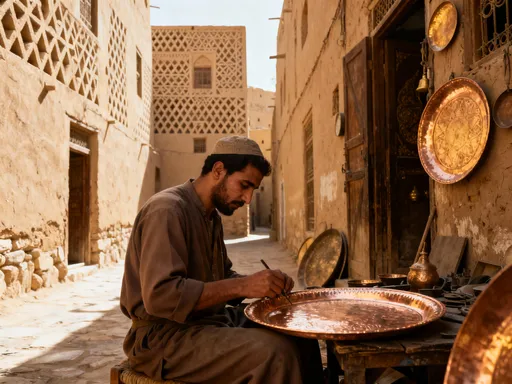
At the center of Sana’a’s commercial life lies Souq al-Milh, the historic salt market, a name that hints at its ancient origins. Salt was once a precious commodity, traded across deserts and mountains, and this market was a vital node in that network. Today, while salt is no longer the primary trade, the spirit of exchange remains vibrant. The souq is a sensory immersion—stacks of woven baskets, mounds of dried herbs, and the constant clang of copper being shaped in nearby workshops.
Walking through Souq al-Milh is to engage all the senses. The air is thick with the earthy aroma of saffron, the sharp tang of cumin, and the sweet smoke of frankincense burning in small bowls. Vendors sit behind low tables, their goods arranged with care. Some specialize in medicinal herbs, offering knowledge passed down through generations. They explain how hibiscus calms the nerves, how black seed oil supports immunity, and how myrrh can be used in both healing and ritual.
Bargaining here is not a battle of wills but a ritual of conversation. It begins with a smile, a question about your journey, an offer of tea. Prices are not fixed, but the negotiation is guided by mutual respect. A vendor might lower his price not because he is pressured, but because he senses your genuine interest. The goal is not to win, but to reach an agreement that feels fair to both sides. In this way, shopping becomes a form of dialogue, a bridge between strangers.
One of the most striking aspects of Souq al-Milh is the depth of knowledge held by its vendors. They are not merely sellers but keepers of tradition. Ask about the difference between types of frankincense, and you will receive a detailed explanation of resin grades, harvest seasons, and regional variations. Inquire about natural dyes, and you may be shown samples of indigo, pomegranate rind, and walnut husk, each producing a unique hue on handwoven cloth. This exchange of knowledge is as valuable as any purchase.
Craftsmanship in Motion: Where Goods Are Made, Not Just Sold
Beyond the market stalls, Sana’a’s true treasures are born in quiet workshops tucked behind unmarked doors. These are places where time moves differently—where a single silver bracelet may take days to complete, where a handwoven textile tells the story of a family’s skill across generations. To visit one of these workshops is to witness artistry in motion, not as performance, but as daily practice.
In a dimly lit alley near Bab al-Yemen, a coppersmith sits cross-legged on the floor, hammer in hand. Before him lies a flat disc of copper, which he shapes with precise, rhythmic strikes. Each blow brings the metal closer to its final form—a shallow tray adorned with geometric patterns. The sound is hypnotic, a steady beat that has echoed through these streets for centuries. Nearby, another artisan polishes the piece with a cloth, revealing a warm, reflective surface that catches the sunlight.
Not far away, a weaver works at a wooden loom, her hands moving with practiced ease. The loom is a simple frame, yet it produces fabric of remarkable complexity. She uses natural dyes—deep reds from madder root, soft yellows from saffron—to create patterns that echo the city’s architecture. When asked about her work, she smiles and says, “This is how my mother wove, and her mother before her.” There is no rush. A single piece may take weeks to complete, but the care ensures its longevity.
Buying directly from artisans supports traditions that are at risk of fading. Globalization and economic hardship have made it difficult for many craftsmen to sustain their livelihoods. When travelers choose to purchase handmade goods—whether a silver dagger sheath, a hand-stitched leather pouch, or a woolen shawl—they contribute to the preservation of these skills. The items may take time to be made, and some artisans offer to ship them later, but the wait is part of the experience. What arrives is not a souvenir, but a legacy.
Hidden Corners: The Joy of Unplanned Discoveries
One of the greatest rewards of slow travel is the discovery of places that do not appear on maps. In Sana’a, some of the most memorable encounters happen in the city’s hidden corners—small stalls tucked into stairwells, courtyards where an elderly man sells antique books, or a quiet corner where a woman displays hand-embroidered handkerchiefs stitched with gold thread.
I once climbed a narrow staircase between two ancient buildings, drawn by the faint scent of leather and dye. At the top, I found a tiny workshop where a man was stitching a bag from supple goat leather. He worked without a machine, using a single needle and strong thread. The bag was not for sale yet—it would take two more days to finish—but he welcomed me to sit, to watch, to share tea. We spoke little, but the silence was comfortable, filled only by the tap of his awl and the distant call to prayer.
These moments are not staged. They happen because the traveler has slowed down, has chosen to wander without a fixed destination. In doing so, they become open to serendipity. A vendor may invite you to taste a new blend of spice. A craftsman might show you a family heirloom. These are not transactions but gestures of hospitality, offered freely and received with gratitude.
The best finds in Sana’a are often the least expected. A small vial of rosewater from a hidden apothecary. A hand-carved wooden spoon from a forgotten stall. These items carry more than aesthetic value—they carry memory. They remind you of the person who made them, the alley where you met, the tea you shared. In a world of mass production, such objects are rare. They are not bought; they are earned through presence and patience.
Beyond the Buy: How to Shop with Respect and Awareness
Shopping in Sana’a is not a neutral act. Every purchase exists within a cultural context, and travelers have a responsibility to engage with that context thoughtfully. This means avoiding items that carry sacred significance—such as prayer beads or religious texts—when they are clearly not intended for sale. It means refraining from photographing people without permission, especially women, and never treating a person or tradition as a backdrop for a photo.
Practical considerations matter, too. Carrying small denominations of Yemeni rial makes transactions smoother, as change can be difficult to find. Learning a few basic Arabic phrases—such as *shukran* (thank you), *kam al-thaman?* (how much?), and *bikhayr* (peace be upon you)—goes a long way in building rapport. When offered tea, accept it if possible. To refuse is not always rude, but to accept is to say, “I am open to you.”
It is also important to recognize that not every interaction must end in a purchase. A long conversation, a shared smile, a moment of understanding—these are valid outcomes of a visit to a stall or workshop. The goal is not to collect objects, but to connect with people. When you do buy something, do so with the knowledge that you are supporting a family, preserving a craft, and honoring a tradition.
Respect also means being mindful of the economic realities. While bargaining is expected, it should not come at the expense of the vendor’s livelihood. A fair price is one that allows the artisan to continue their work. Ask questions. Listen. Let the interaction guide the transaction. In this way, shopping becomes not an act of consumption, but of reciprocity.
Why This Kind of Travel Matters
Traveling through Sana’a with intention changes more than your itinerary—it changes your perspective. The slow, deliberate act of shopping in its markets teaches patience, presence, and humility. It reminds us that value is not measured in speed or price, but in care and connection. In a world that often feels rushed and disconnected, Sana’a offers a different rhythm—one that invites us to pause, to listen, to be.
Every purchase made with awareness contributes to the resilience of local communities. It supports artisans who keep ancient skills alive, vendors who preserve traditional knowledge, and families who depend on these crafts for their livelihoods. This is not charity; it is solidarity. It is a recognition that our choices as travelers have weight, that we are not just observers, but participants in a living culture.
What stays with you after leaving Sana’a is not the items you carry home, but the moments you shared. The quiet conversation with a coppersmith. The taste of spiced tea in a sunlit courtyard. The feeling of holding a handcrafted cup, warm between your palms, as the call to prayer drifts through the alley. These are not experiences to be consumed, but to be carried within.
So travel not just to see, but to understand. Walk slowly. Speak gently. Buy with care. Let the city reveal itself in its own time. And when you return home, may the rhythm of Sana’a linger in your steps, in your choices, in the way you hold your tea, and in the way you remember what it means to be truly present.